Showing posts with label The Atlantic. Show all posts

Thursday, 29 October 2020

The Atlantic Daily: This Isn’t 2016

Every weekday evening, our editors guide you through the biggest stories of the day, help you discover new ideas, and surprise you with moments of delight. Subscribe to get this delivered to your inbox.

THE ATLANTIC

1. This isn’t 2016.

Democrats fear a repeat of last cycle’s polling mistakes. Our staff writer Derek Thompson offers five reasons why this election is different.

2. Here’s what liberals don’t understand about pro-Trump Latinos.

“For liberal pundits, activists, and pollsters to focus on new Democratic turnout among Latinos misses the persuasiveness of the Republican pitch to Latino voters—and the staying power of their support,” Christian Paz, an assistant editor on our politics team, writes.

3. Many white men love Donald Trump’s coronavirus response.

And more than 80 percent of Republicans approve. Why? The simplest explanation “is that Trump voters like Trump,” Olga Khazan reports.

4. Meanwhile, the president’s “America First” doctrine left America alone.

“In seeking to exhibit strength, Trump has made America weaker,” Tom McTague and Peter Nicholas argue in the second part of their series on the president’s first-term foreign policy. (Read part one.)

5. Now meet Joe Biden’s progressive wingman.

Jared Bernstein says the far left is getting the Democratic nominee all wrong, Saahil Desai reports.
APPLE

Four movies to watch between now and Tuesday

Our critic David Sims selected a few: “As Election Day approaches, here are four new films worth watching that try to reckon with the world we’re living in—and the future that lies ahead.”

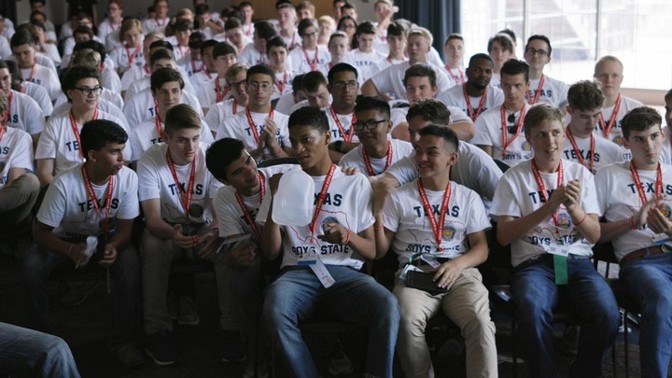
1. Boys State (Apple TV+)

This documentary about teenagers attending a weeklong political-campaign camp is thrilling, sweet, and a little terrifying. The film focuses on young civic-minded heroes worth rooting for, but they have to fight against other teens relying on cheap political gamesmanship.

2. The Trial of the Chicago 7 (Netflix)

Aaron Sorkin’s new movie has his usual fizzy dialogue and stacked cast, but it explores a dark political moment, when left-wing protesters were unfairly put on trial by their government. Sorkin’s usual brand of stirring reverence for America’s institutions is blunted here, but that’s a good thing.

3. David Byrne’s American Utopia (HBO)

Spike Lee’s magnificent filmed version of the musician’s hit Broadway show mixes song, dance, and thoughtful lectures on America’s interconnectedness. The film has Talking Heads classics aplenty, but also an optimistic, vibrant celebration of empathy and togetherness in Byrne’s charming interludes.

4. World of Tomorrow 3: The Absent Destinations of David Prime (rent on Vimeo)

Don Hertzfeldt’s stunning sci-fi series of animated shorts has gotten only more ambitious and complex with every sequel, and the latest entry is a 34-minute epic involving time travel, covert assassinations, and futuristic malware. Check out all three World of Tomorrow movies if you haven’t already, but each entry is a wonder in its own right.

LUKE SHARRETT / BLOOMBERG / GETTY

One question, answered: Why do we still have an Electoral College?

Lora Strum, an assistant editor, explains:

The short answer: The Electoral College is in the Constitution, and it’s very hard to amend the Constitution. But, after the college delivered the presidency to two popular-vote losers in quick succession (George W. Bush in 2000 and Donald Trump in 2016), the question of whether it should be replaced has resurfaced.

But it’s unclear whether the system can change. If an amendment isn’t possible, one proposal—the National Popular Vote interstate-compact plan—could push the country closer to a popular election without altering the Constitution.

What to read if you’re looking for practical election advice:


Did someone forward you this newsletter? Sign up here. Need help? Contact Customer Care


from The Atlantic https://ift.tt/380Bb1o

Friday, 23 October 2020

The Atlantic Daily: The Case Against Donald Trump

Every weekday evening, our editors guide you through the biggest stories of the day, help you discover new ideas, and surprise you with moments of delight. Subscribe to get this delivered to your inbox.

THE ATLANTIC

“Spectacularly obvious.”

That’s what our editor in chief, Jeffrey Goldberg, writing on behalf of The Atlantic’s editors, called the choice voters face this November.

“Two men are running for president,” he writes. “One is a terrible man; the other is a decent man. Vote for the decent man.”

For just the fourth time in our 163-year run, The Atlantic is endorsing a candidate, and that candidate is Joe Biden.

We are doing so because President Donald Trump represents a threat to our collective existence:

Biden is a man of experience, maturity, and obvious humanity, but had the Republican Party put forward a credible candidate for president, we would have felt no compulsion to state a preference. Donald Trump, however, is a clear and continuing danger to the United States, and it does not seem likely that our country would be able to emerge whole from four more years of his misrule.

Read the full endorsement on our site.

JULIO CORTEZ / AP

What to read if … you’re still processing last night’s debate:

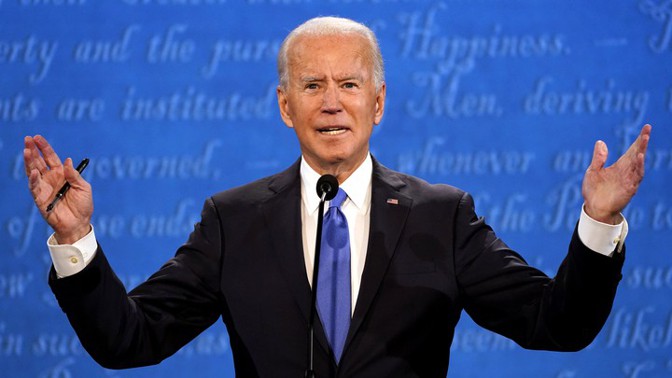
Although the mute button worked in Trump’s favor, David Frum argues, he still failed to establish an emotional connection with voters. Biden, meanwhile, seized the president’s populist mantle, David A. Graham writes.

11 days remain until the 2020 presidential election. Here’s today’s essential read:

Our White House correspondent, Peter Nicholas, went on a hunt for the elusive Clinton-Trump voter.

Want to better understand the ongoing coronavirus outbreak? Here are four key stories from our team:

Stuck on what to stream? Let us help:

Sofia Coppola’s On the Rocks is “a surprisingly fizzy bit of escapism,” our critic David Sims writes. The film, which stars Rashida Jones and Bill Murray, is available to stream on Apple TV+ this week.

Today’s break from the news:

Earlier this week, a NASA spacecraft touched an asteroid millions of miles from Earth and tried to scoop up some rocks. Read Marina Koren on what scientists hope to learn from those samples.


Did someone forward you this newsletter? Sign up here. Need help? Contact Customer Care.


from The Atlantic https://ift.tt/2J4sTeR

Tuesday, 13 October 2020

The Atlantic Daily: The Abortion Question Comes for Amy Coney Barrett

Every weekday evening, our editors guide you through the biggest stories of the day, help you discover new ideas, and surprise you with moments of delight. Subscribe to get this delivered to your inbox.

KEVIN DIETSCH / GETTY

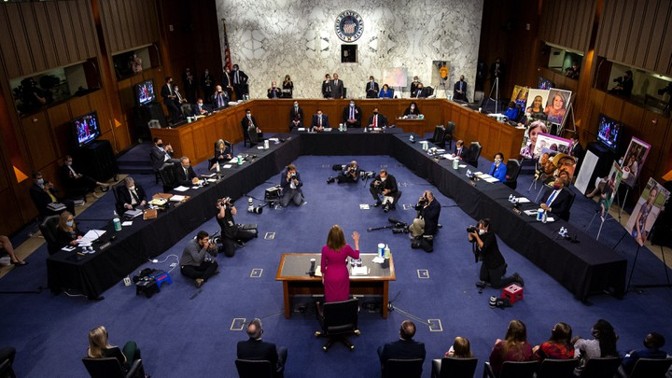
Amy Coney Barrett didn’t answer the question. Today, the Supreme Court nominee demurred when asked to weigh in on Roe v. Wade, the 1973 decision establishing women’s constitutional right to abortion.

Emma Green, a politics writer who’s been covering the proceedings, offers a reality check:

We will not know by the end of Barrett’s nomination hearings how she would rule on an abortion-related case. … The only way to know the answer is to wait and see what she does on the bench, after her lifetime appointment is secure.

Here are two things we do know so far about Barrett—and how she’s being pitched—as pulled from Emma’s recent reporting:

1. Barrett is everything conservatives want in a nominee. The trade-off is that she’ll always be tied to President Donald Trump.

2. Republicans are pitching Barrett as a feminist icon. And they’re doing so at a moment when the party is struggling to win the votes of American women.

Further reading: Barrett’s religious background might make her less predictable than many presume, argues T. M. Luhrmann, an anthropology professor at Stanford University.

GETTY / ARSH RAZIUDDIN / THE ATLANTIC

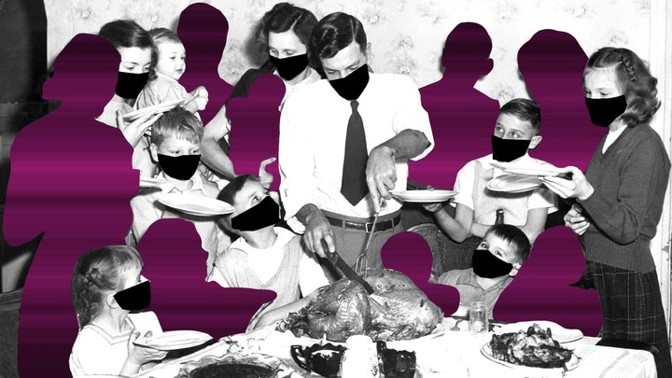
One question, answered: Is there a safe way to be home for the holidays?

With winter approaching, our staff writer Joe Pinsker asked the experts. Here’s the short version:

While reporting, I had two main questions: Will Americans go home for the holidays? And should they go home for the holidays? One epidemiologist I spoke with told me that he thought the answers to those questions were “yes” and “no,” respectively. There’s a good deal more to say than that, but that pair of responses should guide how people make plans during a dangerous holiday season.

For detailed advice on holiday safety, read the full piece.

21 days remain until the 2020 presidential election. Here’s today’s essential read:

“American voters might be surprised to learn that their elections are subject to foreign observation,” Yasmeen Serhan reported from London earlier this month. That’s a trickier task than normal this cycle.

Today’s break from the news:

NASA finally made a toilet for women.


Dear Therapist

BIANCA BAGNARELLI

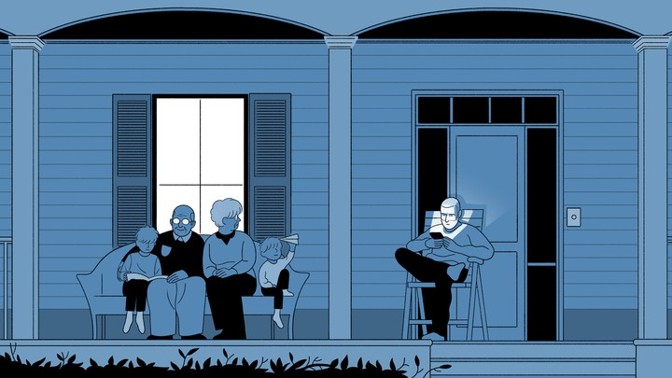
In her latest column, Lori Gottlieb advises a grandparent whose daughter’s family doesn’t appreciate the help she and her husband are providing:

Any time I want to talk with my daughter about an issue between us, she tells me she doesn’t have time and it’s not a priority for her. … We’re kind of stuck, and we don’t want to hurt the grandkids at all. Any advice?

Read the rest, and Lori’s response. Every week, she answers questions from readers about their problems, big and small. Write to Lori anytime at dear.therapist@theatlantic.com.


Did someone forward you this newsletter? Sign up here. Need help? Contact Customer Care.


from The Atlantic https://ift.tt/2SOuvuK

Thursday, 8 October 2020

The Atlantic Daily: The Week in Politics

Every weekday evening, our editors guide you through the biggest stories of the day, help you discover new ideas, and surprise you with moments of delight. Subscribe to get this delivered to your inbox.

GETTY / THE ATLANTIC

In a week beset by unthinkable political drama, the vice-presidential debate offered a wormhole back to 2012—to a different moment in American politics. Specifically, one wherein Donald Trump did not sit center stage.

The debate was an “oddly normal” capstone for what was “perhaps the most chaotic week of a chaotic presidency,” my colleague Russell Berman writes.

As this week winds down, here are a few things that our writers who cover politics are thinking about:

THE ATLANTIC

One question, answered: What can I do to help ensure that this year’s election runs smoothly?

Our staff writer Anne Applebaum has some advice in her citizen’s guide to defending democracy. The short version:

1. Help out on Election Day—in person.

2. Help out from home.

3. Join something now. (For example, sign up to receive emails from voting-rights nonprofits.)

4. Talk with people.

5. As a last resort, protest.

Keep reading.

26 days remain until the 2020 presidential election. Here’s today’s essential read:

America is having a moral convulsion, David Brooks argues.

Today’s break from the news:

If we’re going to be inside, it might as well be the inside we want.” In her latest “Material World” column, Amanda Mull explores why Americans have turned to nesting.


Did someone forward you this newsletter? Sign up here. Need help? Contact Customer Care


from The Atlantic https://ift.tt/33ICj7n

Thursday, 1 October 2020

The Atlantic Daily: The Firsts

Every weekday evening, our editors guide you through the biggest stories of the day, help you discover new ideas, and surprise you with moments of delight. Subscribe to get this delivered to your inbox.

Aaron Turner

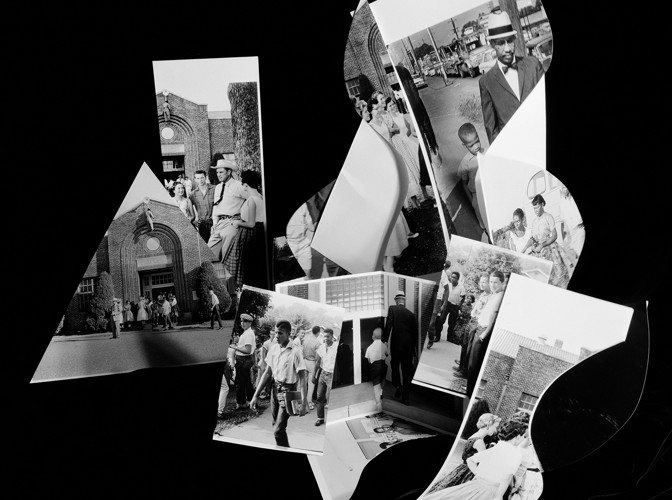
In the years following Brown v. Board of Education, thousands of children desegregated America’s schools. “The task that fell to them was a brutal one,” our senior editor Rebecca J. Rosen writes.

White parents, and their children, attempted to block Black children from attending classes—often ruthlessly—using “bomb threats, beatings, protests. They physically blocked entrances to schools, vandalized lockers, threw rocks, taunted and jeered.”

In our new special project, titled “The Firsts,” our staff writer Adam Harris tells the stories of five students who lived through the transition.

Hugh Price
12 years old ♦  Taft Junior High School ♦ Washington, D.C., 1954

Price and his family fought for him to be one of the first Black students at his all-white high school in Washington, D.C. But once he was there, he “couldn’t wait for it to be over.”

Jo Ann Allen Boyce
14 years old ♦  Clinton High School ♦ Tennessee, 1956

Boyce and 11 other students desegregated their high school in Clinton, Tennessee. Then the riots came.

Sonnie Hereford IV
6 years old ♦ Fifth Avenue School ♦ Alabama, 1963

Hereford IV desegregated Alabama’s public schools in 1963. He was only 6 years old.

Millicent Brown
15 years old ♦ Rivers High School ♦ South Carolina, 1963

Brown changed Charleston, then watched it stay the same.

Frederick K. Brewington
9 years old ♦ Lindner Place Elementary School ♦ New York, 1966

Brewington’s education came at the end of a bitter civil-rights battle that engulfed New York State, more than a decade after Brown v. Board of Education.

MARK REINSTEIN / CORBIS / GETTY

33 days remain until the 2020 presidential election. Here’s today’s essential read:

The most illuminating moment of the debate occurred when the president went after one of Joe Biden’s children, Adam Serwer argues.

“Biden acted like a father, doing what almost any parent would have done,” he writes.

One question, answered: California continues to burn. Does wildfire smoke make COVID-19 worse?

The hosts of our Social Distance podcast talked with John Balmes, a pulmonologist who has studied inhaled pollutants for decades, to find out.

Here’s a snippet of their conversation:

John Balmes: One of the risk factors for smoke exposure is an increased risk of lower-respiratory-tract infections. That’s acute bronchitis and pneumonia, which is particularly problematic in the midst of the COVID-19 pandemic.

James Hamblin: Does it increase your risk of having more severe disease once you’ve been infected if you’ve been living in a place that has high levels of exposure to particulate matter versus someplace else?

Balmes: Yes, there’s a building evidence with regard to air pollution, and particulate matter in particular, and COVID-19.

Find the full episode, “Fires Outside, Virus Inside,” on Apple Podcasts and Spotify.

Want to better understand this specific virus? Here are three key reads from our team:

We all need small delights. Here’s a break from the news:

This calls for a toast: Panic! at the Disco’s debut album, which turns 15 this week, is “an audacious and unlikely classic.”


Did someone forward you this newsletter? Sign up here.


from The Atlantic https://ift.tt/2GtG9rO

Monday, 7 September 2020

Mandela Barnes: ‘Not a Whole Lot’ Has Changed Since George Floyd’s Death

Mandela Barnes, Wisconsin’s 33-year-old lieutenant governor, is only a few years older than Jacob Blake, who was shot seven times by a police officer in Wisconsin last month.

It’s hard, Barnes told me on the latest episode of The Ticket, to be months past the Black Lives Matter protests set off by the death of George Floyd and feel like nothing has improved. It’s harder, he said, to acknowledge this to others, as when he met with the Milwaukee Bucks in the conversations that initiated the temporary NBA and wider sports strikes late last month.

“‘What has changed since the death of George Floyd?’” he said the Bucks star George Hill asked him. “And I said, ‘Honestly, not a whole lot.’”

After a week in which both President Donald Trump and the Democratic presidential nominee Joe Biden traveled to Kenosha to try to address the shooting and the violence that followed, Barnes said, many people are misunderstanding what actually needs to be done to confront police violence and structural racism.

Listen to our conversation here:

Subscribe to The Ticket on Apple Podcasts, Spotify, or another podcast platform to receive new episodes as soon as they’re published.


Here’s a sample of the conversation, edited for length and clarity.

Edward-Isaac Dovere: When the news came that Jacob Blake was shot, you posted something very simple: “You’ve got to be kidding me.” That is not shock that this happened in America. It seems like you were just exasperated.

Mandela Barnes: Completely exasperated. I had just got done reading a book by the lake, sitting outside having a great day, getting ready to go into the week. And then I look online—you know, opening Twitter is always a mistake—but I open Twitter and see Kenosha trending, saw the video and I honestly thought, You have got to be kidding. This did not just happen. After months of the largest movement for racial justice in this nation’s history. People in all corners of Wisconsin have been showing up, marching, holding demonstrations small and large.

The audacity that I saw in that video, for an officer to shoot a person in the back seven times. After all of this. After all the marches. After all the demonstrations. After all the protests. Everybody seemingly coming together to acknowledge that this is a crisis that we face and have faced for some time, that this could still happen.

Dovere: What was your reaction when you saw the video of Kyle Rittenhouse walking by the police with his gun?

Barnes: Oh man, that was another “You have got to be kidding me” moment. Because that’s the dichotomy that we’re talking about. It’s the reason why people show up to march. That this armed person who shot three people, killed two, is able to just walk the street. Police didn’t even give him a second look.

It begs the question—and it’s a very rhetorical question: What are police officers actually threatened by? What threatens them in actuality? Is it a person who is walking the street who claims to be some sort of militia member with a long-rifle assault-style weapon? Or is it somebody who is unarmed and Black? Who is more frightening to you?

Dovere: You said you didn’t want President Donald Trump to come to Kenosha like he did at the beginning of the week. Why not?

Barnes: Donald Trump has yet to condemn the killings of two people in our streets. We see this young man, who was transported across state lines by his own mother, killed two people in cold blood on our city streets, severely injured another … has not been rebuked once by our president. Yet the actions of this man have essentially been celebrated by the same president. You can’t sit here and talk about “lawlessness” and “mobs” coming in, and try to create division and scare people, when the actual guy that killed somebody is on your side.

Dovere: Joe Biden also came this week. Both of them said it’s not about politics, but of course they are both candidates for president who made special trips to Kenosha. Isn’t that about politics?

Barnes: It is beyond politics, but it takes political leadership to fix this sort of moment. And if you have a person who is in power right now who is only making things worse, whether it’s by his incendiary remarks, his statements about the protests in general … and showing this total disconnect from reality, then yes, it does matter. It matters who is in leadership. It matters who we elect. And Joe Biden’s trip is a little bit different.

I’ve gotten asked about it before, and I maintain my statement: Anybody who seeks to come to this state to create more division is not welcome. People who want to be a part of Kenosha’s healing? Great. Jesse Jackson was here. He is a political figure. It’s about your approach. What are you bringing into our state? We don’t need more hate. We don’t need more fear.

Dovere: Do you think there is anything to the idea that the Democratic Party has failed Black Americans, failed cities?

Barnes: No, I won’t say that. Because the same people who show up and say, “These Democrat mayors are running these cities into the ground,” what is their answer? They never have an answer. It’s always finger pointing. We’re talking about cities with large populations. You have a large population; you are going to have challenges. We have a more diverse population, and when opportunities are fewer for people, you are going to have these issues. All of these major cities in America, especially in the Midwest, were built on an industry that doesn’t exist anymore—the manufacturing backbone of these cities and towns across Wisconsin, Illinois, Indiana, Ohio, Pennsylvania, Michigan … Once those factories left and closed their doors, it didn’t just take the jobs, it took the identity of these communities. And we are dealing with a generational impact of that loss where people were able to come to places like Milwaukee and thrive.

Dovere: You were involved with the Milwaukee Bucks’ decision to protest a game, which led to a wider shutdown of first the NBA, then other sports. How did you get involved?

Barnes: The Bucks decided that they weren’t going to go on the court, and they wanted to talk to somebody. They needed to talk to somebody to figure out exactly what was going on and what was going to change.

This has been a team that’s been committed to justice issues. And George Hill straight-up asked, “What has changed since the death of George Floyd?” And I said, “Honestly, not a whole lot.”

We introduced a package of bills in the wake of George Floyd’s death two months ago, and the Republican-controlled legislature has refused to even have a debate on these bills. I said, “Now a couple of school boards got police officers out of schools, but that’s about the most meaningful thing that’s happened since George Floyd.” And they were shocked. They were genuinely shocked. And they just wanted to know: What could they do?

And I said, “Whatever you say, the two main points I want you to hit on are that the legislators need to respond. They need to come into the special session that the governor has called for. They need to meet and have a debate on these bills. They need to take up this legislation. And also just remind people to vote.”


from The Atlantic https://ift.tt/2FaKK1P

Friday, 21 August 2020

The Atlantic Daily: 9 Podcast Picks From Around Our Newsroom

Every weekday evening, our editors guide you through the biggest stories of the day, help you discover new ideas, and surprise you with moments of delight. Subscribe to get this delivered to your inbox.

I asked nine people from around our newsroom, including members of our Atlantic podcasting team, to pick an episode worth streaming in this moment.  

Be sure to also check out our Atlantic podcasts:

  • Floodlines is the story of an unnatural disaster.

  • Social Distance offers some scientific perspective on this outbreak.   

  • The Ticket helps you get to know the people and the politicians who make the news.

WTF With Marc Maron, “Ellen Page” (Episode 1148)

Marc Maron, an actor and a comedian, is one of the O.G.’s of podcasting. Since 2009, he has interviewed President Barack Obama, Paul McCartney, and Cate Blanchett, among many others, while also using his platform to document his life—career successes and failures, breakups, sobriety. In May, his girlfriend, Lynn Shelton, a television and film director, died suddenly of acute myeloid leukemia. Since Shelton’s death, Maron has grappled with his shock, anger, and pain on air, often breaking down into tears, including during a recent interview with Ellen Page. Maron’s grief also transcends his own experience and mirrors a larger, collective grief that has taken hold of the nation in the midst of the pandemic.

Thomas Gebremedhin, senior editor

The Service, “The Club” (Episode 4)

We typically think of alliances as permanent, and of the current president as ripping those apart, but in fact such partnerships have always been a combination of strategy and convenience. The Service is a fantastic podcast series from Radio New Zealand that uses the story of the country’s Security Intelligence Service to delve into New Zealand’s place in the world, its role in the Cold War, and how its often-fraught relationship with the United States changed over time. It feels relevant to a moment when all of America’s friendships around the world seem to be in flux.

Prashant Rao, senior editor overseeing our Global section

Song Exploder, “Solange - Cranes in the Sky” (Episode 94)

I love hearing the musicians behind my favorite songs deconstruct their process, but my interest has mostly been in the production. This changed after I found Song Exploder: Listening to Solange’s interview with Hrishikesh Hirway turned what was, for me, a sonically interesting track into a devastating-but-comforting song. In a year of both stasis and upheaval, I need a beloved artist to tell me “It’s okay not to be okay.”

Shan Wang, senior editor

5-4, “Bush v. Gore” (Episode 1)

Presented by the Slow Burn co-creator Leon Neyfakh, 5-4 is, as its attorney hosts put it, “a show about how much the Supreme Court sucks.” Each episode tackles a different SCOTUS ruling, running through the case’s history and legacy. It’s certainly a chat show, but the case-by-case episodes give it a structure that allows it to be loose. The first episode, Bush v. Gore, is a great place to start. The 2000 case is arguably the modern turning point in the court’s politicization, not to mention an instructive moment to revisit as the country heads into another fraught election.

Kevin Townsend, podcast producer who’s worked on Social Distance, The Ticket, and Floodlines

Slow Burn, “The Nazi and the Republicans” (Season 4, Episode 3)

I love Slow Burn, Slate’s documentary podcast, for its ability to imbue history with a deep sense of urgency. And although I recommend the show’s entire fourth season, which centers on the white supremacist David Duke and the conditions that allowed for his political mainstreaming, I especially recommend a moment in the middle of Episode 3. Anne Levy, who survived the Holocaust as a child and lives with its memories, publicly confronts Duke, who insisted that the Holocaust was a hoax. Retold by Levy, the exchange is stop-you-in-your-tracks gripping and, in the end, cathartic—as Duke, unable to answer for his lies, flees the scene.

Megan Garber, staff writer covering culture

Invisibilia, “Locked-In Man” (part of Season 1, Episode 1)

The title of this segment, I recognize, makes it sound a little on the nose for the moment. But it’s actually the story of Martin Pistorius, a man who spent more than a decade living with locked-in syndrome—unable to move or communicate with the outside world. The segment is a hopeful and empathetic exploration of how to manage being trapped with your most meddlesome and intrusive thoughts. The reporter, Lulu Miller, somehow manages to find a few moments of lightness and comedy in Pistorius’s story, which feels extra miraculous right now.

Alvin Melathe, podcast producer who’s worked on Floodlines and Social Distance

This Land, “The Case” (Episode 1)

One of the most consequential Supreme Court decisions this year was McGirt v. Oklahoma, wherein the Court ruled that much of the state of Oklahoma can still be considered part of the Creek Nation’s reservation. A year before the decision, which marks one of the most significant victories for indigenous sovereignty in recent years, Crooked Media host Rebecca Nagle delved into the case with This Land. The episode is a wonderful starting place for anyone searching for a deeper understanding of the ongoing dispossession of Indigenous Americans by the descendants of settler governments.

Vann R. Newkirk II, staff writer and host of the podcast Floodlines

Limetown, “What We Know” (Episode 1)

I’ll admit that the first time I heard this podcast I briefly thought it was a true story. The first episode of the series, which is about a fictional place called Limetown where all the residents mysteriously disappear, is so well-produced and haunting that just thinking about it gives me chills. It's a good binge and a total guilty pleasure.

Julie Bogen, senior associate editor

Reveal, “Monumental Lies”

In 2018, the reporters Brian Palmer and Seth Freed Wessler visited more than 50 Confederate museums, shrines, and monuments to investigate those working to keep the Lost Cause alive. Their conversations with museum executives, docents, and descendants of Confederate veterans shed light on the people who have embedded a false version of history into their institutions, and their identities. After the George Floyd protests and amid a renewed debate over Confederate monuments, it’s worth reexamining how racist symbols and stories are preserved, and why.

Morgan Ome, assistant editor


from The Atlantic https://ift.tt/2EmnH3A

Wednesday, 8 July 2020

The Atlantic Daily: The Politics of School Reopening

Every weekday evening, our editors guide you through the biggest stories of the day, help you discover new ideas, and surprise you with moments of delight. Subscribe to get this delivered to your inbox.

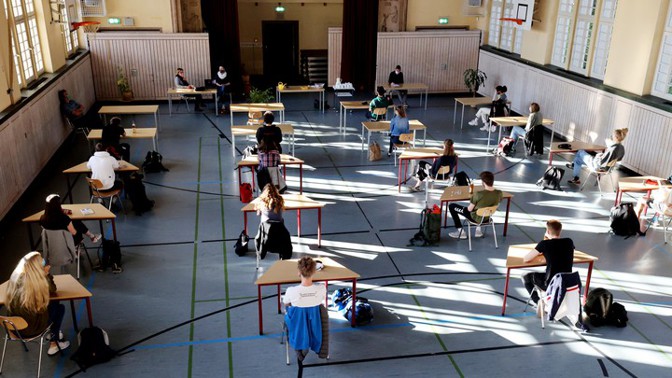
(BODO SCHACKOW / PICTURE ALLIANCE / GETTY)

America still doesn’t have a plan to safely reopen its schools. Earlier today, President Donald Trump criticized the CDC’s guidelines on Twitter, calling them “very tough” and “expensive.” Now the agency reportedly says it will put out new recommendations next week.

Parents of school-age children, meanwhile, remain in limbo, juggling work and care. What went wrong here? Is a better fall possible? Our writers weigh in:

America treated reopening schools like an afterthought.

“The lingering uncertainty about whether in-person education will resume isn’t the result of malfeasance, but utter nonfeasance,” Juliette Kayyem argues. “Four months of stay-at-home orders have proved that, if schools are unavailable, a city cannot work, a community cannot function, a nation cannot safeguard itself.”

Does keeping schools closed do more harm than good?

Some public-health experts think so. “They believe the hazards should be weighed against the costs of changing children’s lives so dramatically,” Olga Khazan reports.

Parents need answers. Now.

Emily Oster, an economist at Brown University, started compiling data on child care out of frustration. “If countries with open schools simply reported the number of confirmed COVID-19 cases per school each week—if any—that would do wonders,” she argues.

(OLIVIA ARTHUR / MAGNUM)

Two questions about children and the coronavirus

1. Are kids really spared from the virus?

“Some children are having a delayed immune reaction after getting infected,” James Hamblin explains in his latest “Paging Dr. Hamblin” column. “The extent of the condition is just coming into view.”

2. What happens when kids don’t see their peers for months?

Lydia Denworth reports:

Even kids of the same age have different interests, needs, and personalities, and their responses to quarantine will be different too. Some children who dealt with bullying or social anxiety prior to the pandemic might have found social distancing to be a relief. … But others with mental-health issues or a less-than-happy home environment are more likely to suffer from being out of school or camp.

Have an outstanding question related to kids and this outbreak? Let us know.

What to read if … you want practical tips:

What to read if … you’re seeking a soundtrack to this strange summer:

Turn to the Brooklyn rapper Pop Smoke’s posthumous debut album. “In a moment of tremendous political and social turmoil, [Shoot for the Stars, Aim for the Moon] offers listeners catharsis,” our critic Hannah Giorgis writes. Read her review.


Did someone forward you this newsletter? Sign up here.


from The Atlantic https://ift.tt/3iDzOc9

Wednesday, 20 May 2020

The Atlantic Daily: America Is Stuck in a Patchwork Pandemic

Every weekday evening, our editors guide you through the biggest stories of the day, help you discover new ideas, and surprise you with moments of delight. Subscribe to get this delivered to your inbox.

Joan Wong

The national COVID-19 curve tells one story. The state-by-state numbers tell another, far more nuanced one. This outbreak is waning in some places (New York and New Jersey), while growing in others (Texas and North Carolina).

We’re in the middle of what my colleague Ed Yong calls a patchwork pandemic,” a crisis that’s really a collection of interconnected smaller crises. Americans should not expect things to go back to normal swiftly, nor should they expect a unified national experience, he reports.

This type of splintered outbreak is “psychologically perilous”—and downright confusing. Here are three aspects of the pandemic, as explained by Ed, that make it particularly hard to grasp:

1. The disease progresses slowly.

May’s declining cases are the result of April’s physical distancing, and the consequences of May’s reopenings won’t be felt until June at the earliest. This long gap between actions and their consequences makes it easy to learn the wrong lessons.  

2. The pandemic is shaped by many factors.

Social distancing matters, but so do testing capacity, population density, age structure, wealth, societal collectivism, and luck. … No single factor can explain differences across nations or regions.

3. The disease spreads unevenly.

“Super-spreader events,” which are rare but pivotal, become especially important when cases dip. … If a state reopens and sees no immediate spike in cases, is that because it was justified, because insufficient time has passed, because other things went right, or because unlucky super-spreader events haven’t yet happened? In a patchwork, these questions will be asked millions of times over, and many answers will be wrong.

Ed also discusses the U.S.’s messy, patchwork response—and how structural inequities fueled this outbreak in some parts of the country. As usual, I strongly recommend you read his piece in full.

DIANA MARKOSIAN / MAGNUM

One question, answered: Will it be safe to swim in my local pool this summer?

Here’s the good news: The coronavirus can’t survive and spread in chlorinated pool water. The bad news is that it’s extra difficult to maintain and enforce a six-foot distance between people in and around the water—“at the pool,” Olga Khazan writes, “even normal adult behavior tends to devolve into joyous anarchy.”

Though your favorite water park is unlikely to be waving in the crowds, cities that haven’t already barred pools from opening this summer could consider restrictions such as requiring reservations and dividing people by lane. Still, some experts recommend skipping your dip altogether.

What to read if … you just want practical advice:

Tonight’s Atlantic-approved quarantine activity:

Lawrence Wright’s The End of October is a pandemic novel that’s oddly soothing, according to our culture writer Sophie Gilbert.

View all of our stories related to the coronavirus outbreak here. Did you get a pandemic puppy? Are you actively looking for one right now? Tell us about your experience.


This email was written by Caroline Mimbs Nyce, with help from Haley Weiss, and edited by Shan Wang.

Sign yourself up for The Daily here


from The Atlantic https://ift.tt/2XfLBDx

Monday, 18 May 2020

The Atlantic Daily: No One’s Making an 'Avengers' Movie for Your TV

Every weekday evening, our editors guide you through the biggest stories of the day, help you discover new ideas, and surprise you with moments of delight. Subscribe to get this delivered to your inbox.

Thomas Rabsch / laif / Redux

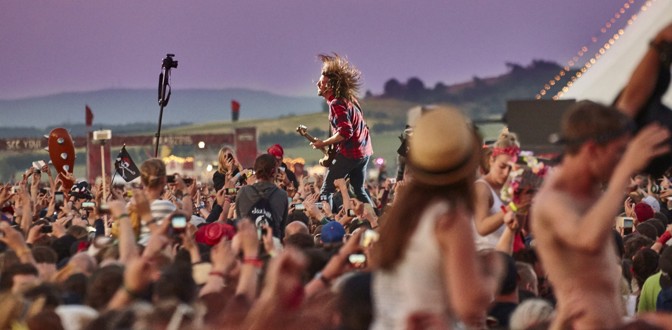
In the Before Times, we’d gather—to headbang along to a rock song, to celebrate love, or to be moved by a new piece of art. Then it all got put on hold.

So what happens next? We are entering uncharted territory for events. Below, our writers discuss the impacts of this outbreak on weddings, theatrical performances, movie showings, and concerts.

Weddings could look different for years to come.

“Once people can more freely gather, move around the country, and do things like dance together and sing loudly into one another’s faces, there’s no guarantee that they’ll want to do so in large numbers,” Ashley Fetters reports. Some couples may opt to just elope, she predicts.

Studios can’t make big money without movie theaters.

They’re dependent on ticket sales, our culture writer David Sims points out on our Social Distance podcast. “No one’s making an Avengers movie for your television,” he told our hosts. “That wouldn’t make sense.”

The theater industry is particularly hard-hit.

But the “real financial crunch point comes if the shutdown lasts beyond November,” when holiday shows usually start to open, our staff writer Helen Lewis reports. “The loss of that revenue, and that chance to introduce youngsters to play-going, would be hugely destructive across the sector.”

Concerts must come back—they’re irreplaceable.

Dave Grohl, the Foo Fighters front man, makes this case in a moving essay. “I don’t know when it will be safe to return to singing arm in arm at the top of our lungs, hearts racing, bodies moving, souls bursting with life,” he writes. “But I do know that we will do it again, because we have to.”  

THE VOORHES / GALLERY STOCK

One question, answered: My wedding is scheduled for this fall. Should I postpone it?

Ashley weighs in:

If you’re planning on having a big wedding, then yes. For one thing, there’s no way to know whether there will be restrictions on gathering sizes later this fall—and even if large gatherings are allowed, chances are that many of your guests will still be hesitant to travel, or attend events with lots of other people, for fear of disease transmission. That said, enough weddings have been postponed from 2020 to 2021 that certain venues and vendors have seen all their available dates fill up already. So either postpone right away to try to snag a new date, or start planning what’s become known in the coronavirus era as a “mini-mony”: a celebration with just a tiny number of guests.

What to read if … you just want practical advice:

Tonight’s Atlantic-approved quarantine activity:

Take a cue from these young people: Grab some friends and set up a virtual version of your favorite reality competition show. For this week’s Friendship Files, Julie Beck spoke with a group of college classmates who are staying in touch by voting one another off the “island”—Survivor style.

What to read if … you’d like to read about something—anything—other than the coronavirus:

Try this thrilling account by our staff writer Barton Gellman, who found himself living under surveillance after receiving a trove of documents from Edward Snowden. “I layered on so many defenses that navigating through them became a chronic drain on my time, mental energy, and emotional equilibrium,” he writes.

View all of our stories related to the coronavirus outbreak here. Did you get a pandemic puppy? Are you actively looking for one right now? Tell us about your experience.

BIANCA BAGNARELLI

Dear Therapist

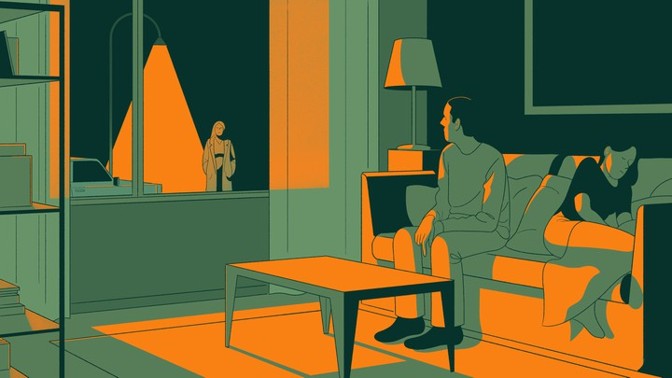
Every week, Lori Gottlieb answers questions from readers about their problems, big and small. This week she counsels a reader living under lockdown with a boyfriend who cheated on her:

I don’t know what to do. While he says he loves me and wants to work on our relationship, he also formed an emotional attachment to this other woman and says he “cares about her.” How could he possibly care about another woman and still say he is in love with me?

Read the rest, and Lori’s response. Write to her anytime at dear.therapist@theatlantic.com.


This email was written by Caroline Mimbs Nyce, with help from Isabel Fattal and Haley Weiss, and edited by Shan Wang.

Sign yourself up for The Daily here


from The Atlantic https://ift.tt/2X4Knee

Wednesday, 6 May 2020

The Atlantic Daily: South Korea’s COVID-19 Exceptionalism

Every weekday evening, our editors guide you through the biggest stories of the day, help you discover new ideas, and surprise you with moments of delight. Subscribe to get this delivered to your inbox.

ED JONES / AFP VIA GETTY

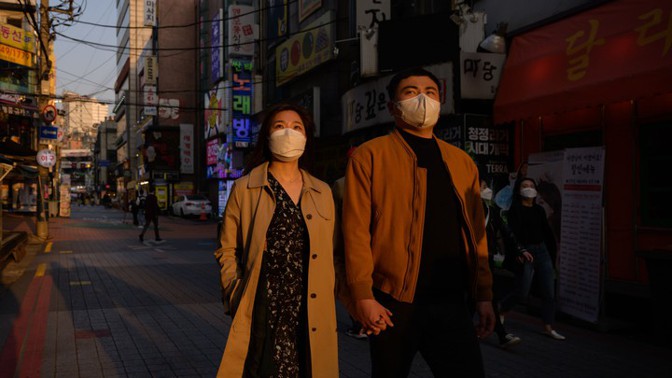
Seven weeks ago, the United States and South Korea had the same number of coronavirus deaths. Now America’s toll measures in the tens of thousands, but South Korea’s remains under 300. The country’s successful flattening of its curve offers a rough sense of what’s working—and what post-peak life might look like.

How South Korea did it  

Derek Thompson reports on the country’s three-pronged strategy: Test, trace, isolate.  

1. Test.

By mid-February—while the U.K. was talking about “herd immunity” and President Donald Trump was predicting that the virus would “miraculously” disappear in weeks—South Korea was churning out thousands of test kits every day. By March 5, South Korea had tested 145,000 people—more than the U.S., the U.K., France, Italy, and Japan combined.

2. Trace.

The national mapping of citizen activity yields fast results. On a Saturday in April, a 58-year-old man was diagnosed with the coronavirus. Surveillance data showed that he had voted in the election and visited several restaurants in previous days. Within 48 hours, South Korea had identified—and, in some cases, interviewed—more than 1,000 people who had potentially come into contact with him.

3. Isolate.

To separate the sick from the healthy—and the somewhat sick from the very sick—South Korea’s patients are divided into several groups. The elderly and those with serious illnesses go straight to hospitals. Moderately sick people are sent to isolation dorms, where they’re monitored.

A glimpse at post-peak life

Uri Friedman, our global reporter, spoke with people around the world, including South Korea, to better understand what life looks like after the curve flattens. He found that cities were coming back to life, but not the life we once knew.

One of the people he spoke with was Sujin Chun in Seoul. A staff writer who covers global affairs for the South Korean newspaper JoongAng Ilbo, Chun is back in the newsroom. Guards at the entrances check people’s temperature, and there’s hand sanitizer everywhere.

The city’s bars, restaurants, and public transportation are filling up again, Chun reports, but the collective mindset remains one of caution: “We are very well aware that it is not time to relax and [think], Things are normal now; let’s party. It’s not like that.”

Stefano Mazzola / Awakening / Getty

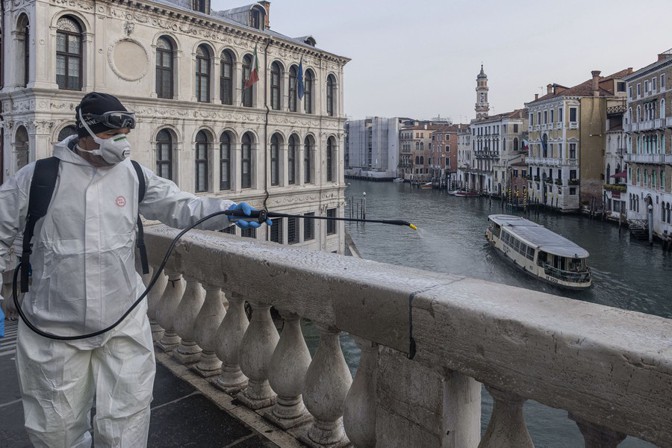
One question, answered: Photos from around the world show biohazard-clad workers spraying down public spaces with disinfectant. (See more photos of this phenomenon.) A reader named Joshua asked: Is that effective? Why aren’t we doing that here?

James Hamblin, our health reporter, answered this question on our new Social Distance podcast. Listen to the full episode here, or read his response below.

The speculation is that some of this was hygiene theater to make people feel more safe by showing them this big, strong government response. The only theoretical way that it could possibly matter is if people are walking around seeding the sidewalks with coughs and sneezes, and you walk on it and get a little bit on your shoe, and then walk into your house and then touch your floor. I could see spraying down any [high-contact] surfaces, like walking into the subway and spraying that down every hour. I’m hoping everybody is doing their best to take off shoes every time they come into their home and not touching the bottoms of them and also washing their hands right when they get in. So no, I’m not worried that we should be doing more spraying down. There’s a million things we should be doing before that.

What to read if … you’d like to be moved by powerful writing:

My colleague Caitlin Flanagan has written an extraordinary essay about having Stage IV cancer amid a pandemic: “I’ve come close to dying a few times, and I’m not afraid anymore, just sad. But if I die from the corona­virus, it will be one more un­necessary American death.”  

Atlantic-approved quarantine activities:

What to read if … you’d like to read about something—anything—other than the coronavirus:

Astronomers discovered a new black hole 1,000 light-years away, closer than any other found to date. “On the scale of the Milky Way, it’s in our backyard,” one researcher told our space reporter Marina Koren.

View all of our stories related to the coronavirus outbreak here. Ed Yong and Ross Andersen will discuss the challenges of reporting on COVID-19 live at 2 p.m. ET, Thursday, May 7. Register for The Big Story EventCast here.

As many stay-at-home orders expire and businesses reopen, do you have questions about what’s safe to do and what isn’t? Send them to us.


Sign yourself up for The Daily here


from The Atlantic https://ift.tt/2zYGUWC

Tuesday, 5 May 2020

The Atlantic Daily: The Bright Spots

Every weekday evening, our editors guide you through the biggest stories of the day, help you discover new ideas, and surprise you with moments of delight. Subscribe to get this delivered to your inbox.

ARSH RAZIUDDIN / THE ATLANTIC

This pandemic forced many big, scary things into the world. But for today’s newsletter, we’re focusing on five bright spots—small, largely positive shifts amid our current reshuffling of order.

Cities get an unprecedented chance to repair roads and bridges.

“Empty streets are allowing construction crews to complete long-needed infrastructure projects at record speed,” our politics writer Russell Berman reports.

Air pollution is down.

Of course, the drop is only temporary, but, as our space reporter Marina Koren wrote last month: “The cleaner air could lead to a brief respite in parts of the world with severe air pollution even as they battle the coronavirus.”

Cities are quieter.

While more research is needed to understand the consequences of these particular circumstances, “it’s well established that noise pollution can negatively affect our health, contributing to stress-related ailments, high blood pressure, sleep disruption, and other problems.”

Food culture shucked its elitism.

Ostentatious recipes are out; practical, inclusive cooking is in. Hannah Giorgis, who previously wrote about her own pandemic cooking experience, notes the shift: “A wave of culinary experts is responding to the pandemic with an accessible and empathetic approach to home cooking—and audiences can’t get enough.”

And people are rediscovering music’s communal value.

“Even if temporary, the turn toward communal listening has the air of something deep and primal,” our culture writer Spencer Kornhaber points out. “Instead, participation and inclusion are in.”

Credit

One question, answered: How widespread are coronavirus conspiracy theories?

As the pandemic unfolded, so did the theories. Two categories of coronavirus conspiracy have made it to the mainstream:

  • That the threat of the virus is being exaggerated to sabotage President Donald Trump’s chances at reelection; and
  • That the virus was created and spread on purpose.

In mid-March, two experts polled a representative sample of 2,023 Americans to try to find out how common belief in these theories is. They asked about a bunch of different conspiracy theories, including the two coronavirus-related ones. The researchers found that belief in coronavirus theories is “about in the middle”—20 or so percentage points lower than the belief that Jeffrey Epstein was murdered, for example, but much higher than belief in some of the other theories they asked about.

While these numbers are concerning, they could be “much higher,” Joseph E. Uscinski and Adam M. Enders write.

What to read if … you just want practical advice:

Tonight’s Atlantic-approved quarantine activity:

Peruse some newly released music. The Mountain Goats’ latest project is “a strangely comforting quarantine album.” Read Spencer’s review, and stream it yourself on Spotify. Meanwhile, Drake responded to the pandemic in a predictably Drake way. Our review of his “demo tape” is here; the Spotify link here.

View all of our stories related to the coronavirus outbreak here. As many stay-at-home orders expire and businesses reopen, do you have questions about what’s safe to do and what isn’t? Send them to us.


Sign yourself up for The Daily here


from The Atlantic https://ift.tt/3flDmxT

Monday, 4 May 2020

The Atlantic Daily: The Pandemic Will Change American Retail Forever

Every weekday evening, our editors guide you through the biggest stories of the day, help you discover new ideas, and surprise you with moments of delight. Subscribe to get this delivered to your inbox.

The COVID-19 Crash

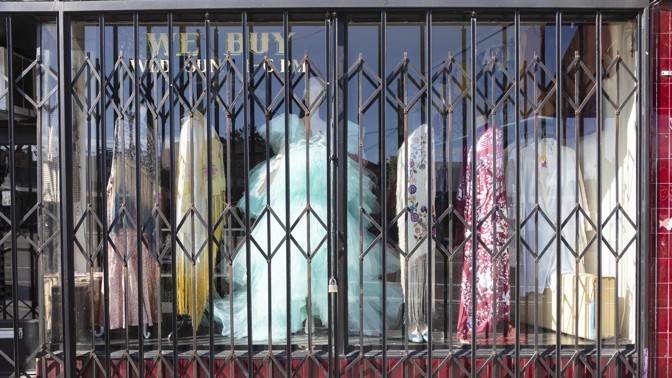
Many small and independently r​un businesses are closed along​ Sunset Boulevard in the Silver Lake district of Los Angeles, California. (ELENA DORFMAN / REDUX)

The American economy is about to endure a once-in-a-generation kind of retooling, one that’ll both decimate and reshape our storefronts. As this recession deepens, keep your eye on these four economic trends, as noted by our writers:

Many mom-and-pop shops won’t make it.

The great die-off is here, our staff writer Annie Lowrey reports. “Small businesses went into this recession more fragile than their larger cousins,” she explains. And congressional relief has been “too complicated, too small, and too slow for many firms.”

Big businesses will own a larger chunk of the economy.

Or, as Annie puts it: “The pandemic will mean the triumph of franchise chains over mom-and-pop shops, of C-suite executives over entrepreneurs working in their basements.” And the U.S. economy will be less competitive as a result.

That’ll leave cities feeling awfully similar …

… perhaps triggering an exodus. “Many thousands of young people who might have giddily flocked to the most expensive downtown areas may assess the collapse in living standards and amenities and decide it’s not worth it,” Derek Thompson, who wrote about American’s shrinking cities, argues.

Deliveries will replace face-to-face transactions.

Online shopping is predicted to take up a greater share of total retail sales. “If stores are off-limits to the masses, then mass commerce must shift to the internet,” Derek points out.

Getty / Atlantic

One question, answered: Should I get an antibody test right now?

Our health staff writer James Hamblin weighs in:

I would recommend it, but only if you’re part of a research study where your results are contributing to an understanding of what results actually mean. Otherwise, it’s generally not advisable to get tests unless we know what to do with the results, and we don’t yet.


What to read if … you just want practical advice:

View all of our stories related to the coronavirus outbreak here.As many stay-at-home orders expire and many businesses reopen, do you have questions about what's safe to do and what isn’t? Send them to us.


Bianca Bagnarelli

Every Monday, Lori Gottlieb answers questions from readers about their problems, big and small. This week she advises a reader who doesn’t want to burden their therapist during the COVID-19 pandemic:

I’ve seen several TV interviews with therapists talking about how bogged down they are with their patients in crisis now. I just don’t want to do that to him. I think that giving him the gift of time may be what he needs right now.

He always talks to me about “the right of self-protection” and how I don’t have to “take care of him.” Still, most people may want to gravitate toward their therapists even more at this time of crisis, and I want to take the pressure off of him and give him some space to deal with his own feelings. He’s only human.

Read the rest, and Lori’s response. Write to her anytime at dear.therapist@theatlantic.com.


(Russet Apple / Alamy Stock Photo)

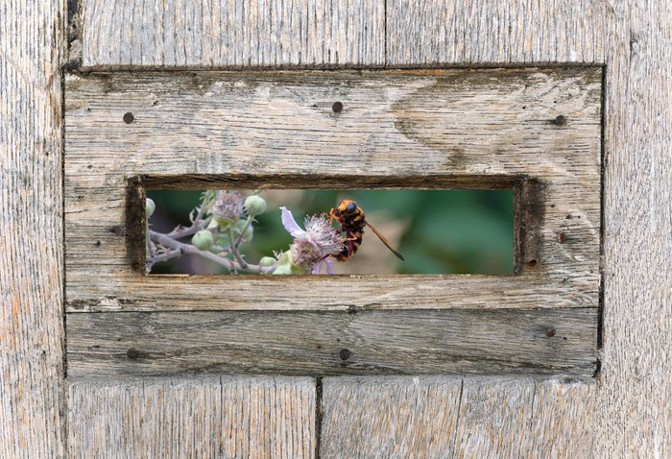
Over the weekend, the internet was abuzz (sorry) over reports that a deadly Asian hornet had been spotted in the western U.S., threatening to wipe out America’s honeybee population.

While local bees might not stand much of a chance against this powerful species, Japanese bees, which co-evolved with the hornets, can fight back. Our staff writer Ed Yong, who writes about all sorts of extraordinary animal behavior, explains their brutal technique:

In large numbers, the bees dogpile an individual hornet, encasing it in a ball of bodies. This behavior is called “heatballing.” It raises the carbon-dioxide concentrations within the ball to 100 times that of ambient air, and the temperature to more than 113 degrees Fahrenheit—a level the bees can withstand but the hornets cannot. The hornets choke and cook, and the beehive is saved. Bees are a reminder that even during the current pandemic, billions of tiny dramas are playing out around us.


Sign yourself up for The Daily here.


from The Atlantic https://ift.tt/2WxMI1c

Friday, 1 May 2020

The Atlantic Daily: What an Oscar-winning Filmmaker Is Watching

Every weekday evening, our editors guide you through the biggest stories of the day, help you discover new ideas, and surprise you with moments of delight. Subscribe to get this delivered to your inbox.

Today, we send you into the weekend with:

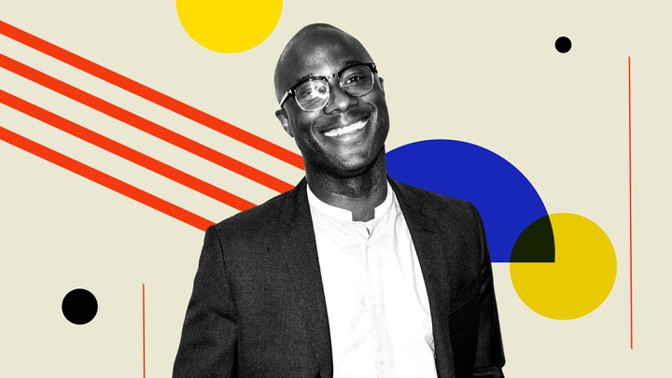
  • Three quarantine film recommendations, selected by the Moonlight director Barry Jenkins;

  • Three new TV shows to consider, as reviewed by our writers;

  • Three short documentaries, available to stream on our site right now.

(If you prefer the page to the screen, browse our weekly Books Briefing.)

JUANITO AGUIL / GETTY / THE ATLANTIC

Barry Jenkins’s Quarantine Film List

The Oscar-winning director, best known for Moonlight, was wrapping an upcoming television project when the stay-at-home orders arrived. Since then, it’s all Mondays. “I feel like we’ve been home for three Mondays, and nothing else,” Jenkins told our staff writer David Sims. “It’s just been one continuous Monday.”

To reclaim that Friday-at-the-movies feeling, try one of these Jenkins-approved picks:

MID-AUGUST LUNCH (2008)

The film: This light Italian comedy-drama follows a man who starts caring for his neighbors’ elderly relatives during the busy holiday season as a way to pay off his debts.

Jenkins’s notes: “I’ve been [thinking] about Italy during this crisis, and this was a tiny film I’d seen years ago. It’s the most amazing little film, the directorial debut of the writer of the Italian film Gomorrah. It’s 75 minutes, it’s on Amazon Prime, and it’s just delightful.”

Watch it on: Amazon Prime

TRAIN TO BUSAN (2016)

The film: A zombie apocalypse suddenly breaks out in South Korea, ensnaring the passengers of a train on the way to the city of Busan.

Jenkins’s notes: “This was [Jenkins’s partner, the writer and the director Lulu Wang’s] recommendation. I hadn’t seen it, but it’s really awesome—I was in the back room where we watched, screaming and shouting. It transported us, in a way! We turned the lights off, enjoyed the jump scares.”

Watch it on: Netflix

STALKER (1979)

The film: Andrei Tarkovsky’s sci-fi masterwork sees a strange figure called the “Stalker” leading a writer and a professor into the forbidden and desolate “zone,” where a room supposedly exists that can fulfill any desire.

Jenkins’s notes: “It’s the kind of movie that sits in the back of your head.”

Watch it on: Criterion Channel

You can find more details about Jenkins’s choices—along with five additional picks—on our site.

HULU / THE ATLANTIC

Three New TV Shows, Reviewed

NORMAL PEOPLE

“The Hulu adaptation of Sally Rooney’s hit novel ushers an addictive, messily human portrayal of young love to the small screen.”

LITTLE FIRES EVERYWHERE

“The show is clearly trying to cover the bases [the book’s author, Celeste Ng,] couldn’t get to herself, and it’s admirable to see an adaptation try to improve upon its source material and write toward a savvy audience mindful of social and racial issues. Yet in some ways, it can feel like the show is being pulled in too many directions at once.”

MRS. AMERICA

Mrs. America is maybe the first great television series of 2020, a project that manages to capture the complicated essence of real characters while telling a story at both micro and macro levels.”

Rishi Chandna

Three Bite-Size Documentaries

Step aside, Tiger King. I asked my colleague Emily Buder, who curates our Atlantic Selects documentary series, to pick three bite-size videos worth the watch. This week, she explores the connection between animal and man through three films (all of which are shorter than 15 minutes and can be watched on our site).

PICKLE

The quirky story of a family who rescued a menagerie of variously sick, deformed, or otherwise unconventional creatures

TUNGRUS

The unforgettable tragicomedy about a family living in a cramped Mumbai apartment with a “chicken from hell”

HAIRAT

A poetic ode to the communion between an Ethiopian man and the beloved hyenas that roam his ancient city


Sign yourself up for The Daily here


from The Atlantic https://ift.tt/3bWlPKJ